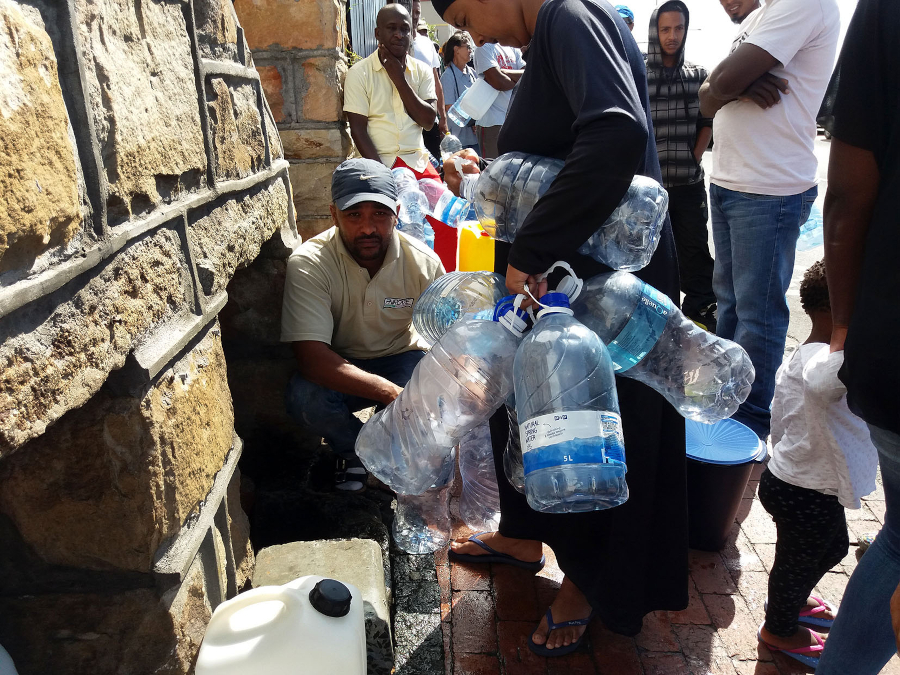
Latest Water Outlook report paints a worrying picture for coming years
- The City of Cape Town’s New Water Programme is only expected to be fully operational by 2036, yet demand is expected to exceed current dam water allocation in two years.
- A desalination plant that is a critical component of the plan is delayed by five years.
- Current dam levels are at only 77% which for this time of year indicate an “early drought caution stage”.
- The winter rainfall was very low, and a long, hot summer is predicted.
The City of Cape Town’s plan to build a desalination plant at Paarden Eiland has been scuttled by Transnet’s intention to expand the port.
Tabling the latest Water Outlook report on 21 August, mayco member for water and sanitation Zahid Badroodien told council they were looking for “alternative locations” for the permanent desalination plant.
Besides possible cost implications, the outlook report states that finding a suitable alternative site and conducting the necessary Environmental Impact Assessment – the scoping phase which had already been completed for Paarden Eiland – will push the project back five years.
The report notes that a 70-million litre per day desalination plant is a critical part of the City’s New Water Programme, which aims to add 300-million litres of water per day in addition to Cape Town’s six supply dams.
The programme includes using groundwater, reusing wastewater, and increasing the amount of water available in the Voëlvlei Dam by 40-million litres per day by pumping water to it from the Berg River.
Currently, the only one of these initiatives delivering any water are boreholes drawing from the Table Mountain Group aquifer in the upper Steenbras area above Sir Lowry’s Pass.
Abstracting groundwater from the Atlantis aquifer has been setback by cable theft. Boreholes and water treatment on the Cape Flats aquifer are still being built.
The Berg River–Voëlvlei scheme has also suffered setbacks. The R1.85-billion scheme was meant to be completed by 2023. This was revised to 2027. The Water Outlook report states completion is now expected in 2030. The scheme is managed by the national Department of Water and Sanitation, not the City.
Meanwhile, Cape Town’s increasing water usage means its maximum allocation from Western Cape dams will be reached within two years. These dams also supply other towns and agriculture so not all the water they hold is available to Cape Town, which receives an allocation determined by the national government.
Although it was developed in the wake of the 2018 “day zero” water crisis, the initiatives in the New Water Programme are only all expected to be on line by 2036 at best.
Low rainfall season
Meanwhile, Cape Town has had a dryer than usual rain season, with the South African Weather Service (SAWS) noting in a statement released on 31 July: “Below-normal rainfall was observed in June and persisted into July, with several parts of the region recording their lowest rainfall on record during July.”
Cape Town’s supply dams do not rely on rain falling on Cape Town, but on the mountains between Stellenbosch and Worcester.
SAWS client liaison officer Robin-Lee Batties said August rainfall over Franschhoek has been drier than usual, and Villierdorp, next to Theewaterskloof, Cape Town’s biggest supply dam, had “one of the lowest July rainfall measurements since its opening in 2011”, and August rainfall has also been lower than usual.
Although cumulative dam levels were at 77% on 24 August (the latest reading at time of writing), the graph has taken a downward trend and has entered what the City calls “early drought caution”.
The City’s Open Data Portal shows the last time the dams were lower than this on 24 August was in 2018 when they were at 61%. But they had risen to that level from a 20% historic low at the end of summer that year, which was when Cape Town was staring down “day zero”. The low point this past summer was around 45%, meaning the dam levels have risen by about 30% over the winter. Most of that water came in the form of floods, and at a high cost. The loss of farmland, homes, roads, and other infrastructure caused by the floods was estimated to be R10-billion, Premier Alan Winde said earlier this month.
Climate change impact
The floods resulted from a cut-off low pressure system which released heavy rains over a short period.
Cape Town’s rainfall comes mostly from low pressure systems that move up from the southern ocean and sweep across the southwestern Cape. But these systems have been forced further south by south Atlantic high pressure cells, which should normally move northwards in winter.
“We have evidence that the South Atlantic High-pressure cell is increasing in strength; and that doesn’t augur well for the frequency of fronts in the future,” UCT climatologist Dr Peter Johnston has stated.
Western Cape government chief director of environmental sustainability Karen Shippey said at a 27 August briefing that human-induced climate change is resulting in increasingly frequent and intense droughts, more hot days and fewer cold days, reduced rainfall, and a shift in wind speed and variability.
Shippey said last year we had winds five times the average wind speed.
The long-term climate change scenario is echoed by the City and the Water Outlook report, which states: “Single ‘cut-off low’ storm events are increasingly determining seasonal rainfall totals – making seasonal forecasting even less reliable.”
Rise in water demand
One dry winter season does not mean Cape Town will run out of water, but two or three in succession creates a serious water shortage. This was the case in the lead up to “day zero” in 2018.
But last season’s rainfall was also low. The cumulative rainfall at Wemmershoek, within the dam catchment area for 2025 was less than that received in 2016, and only slightly higher than the rain received in 2015 and 2017.
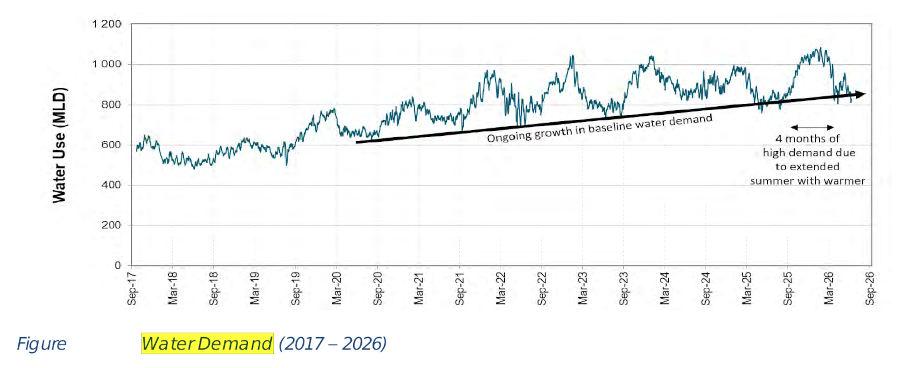
Meanwhile, by GroundUp’s calculations, Cape Town’s average water use has risen 50% over the last nine years. In September 2017, Cape Town was using about 570-million litres a day. Last week, we were using about 850-million litres a day. This is more than double what the City anticipated, given that Cape Town’s population growth over the same period has been about 22%, according to best estimates from available statistics.
“The 2025/26 rate of water demand growth is unsustainable and is more than three times the average ten-year growth rate proposed in the Water Conservation and Water Demand Management Strategy, and more than double the Bulk Water and Water Strategy’s planning assumptions,” states the Water Outlook report.
However, at the height of water consumption in 2015, daily usage was at 1.2-billion, with daily usage dropping to around 500-million litres when dam levels hovered around 20% in early 2018.
Long, hot summer ahead
At the 27 August Western Cape government briefing, Premier Alan Winde said the El Niño Southern Oscillation (ENSO) climate pattern is expected to take effect in the coming months. Winde said this would likely mean hotter days and “extreme heat”, increased fire risk, and increased strain on water resources.
“The convergence of extreme El Niño weather patterns and climate change presents an unprecedented threat to our biodiversity, water security, and our local communities,” said provincial environmental affairs spokesperson Dave Bryant in the provincial legislature.
As a result, the fire season has been extended from four months to eight months, stretching from October to the end of May.
However, El Niño may give Cape Town catchments a wetter than normal September and October.
SA Weather Service’s forecast for August to December indicates “favourable rainfall conditions over the winter rainfall areas” for the end of winter and start of spring.
“The anticipated favourable rainfall conditions during August-September-October, which signals the end of the winter season, are likely to boost surface runoff into dams and reservoirs, possibly benefiting water storage capacity,” states the weather service report.
Nevertheless, both City and provincial authorities say water restrictions in coming months are likely.
~ This story has also been published on GroundUp