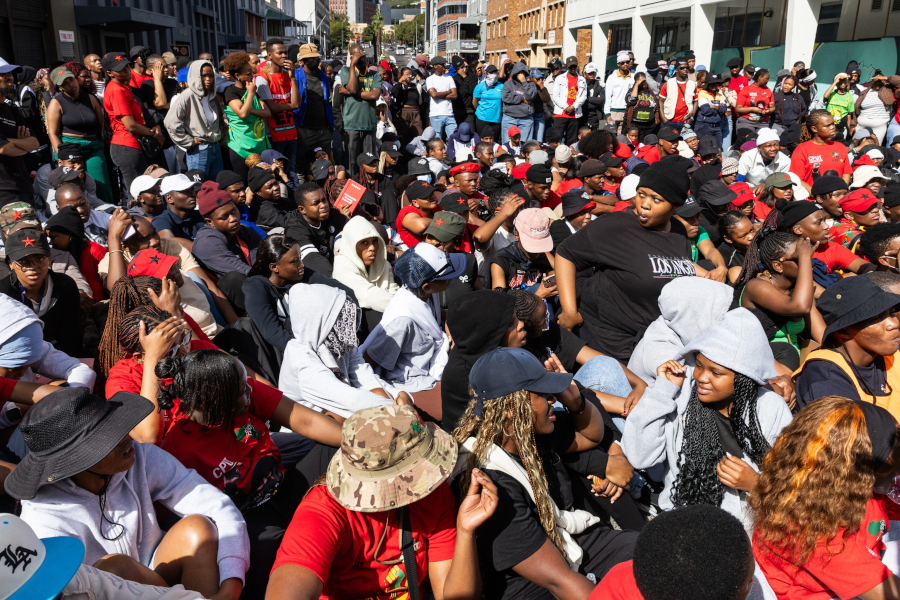
Violent protests related to the NSFAS funding cap, among other demands, have rocked Cape Peninsula University of Technology campuses over the past month
Some of the demands made by protesting Cape Peninsula University of Technology students have been met by the university management.
In a statement released on 29 August, the Central Student Representative Council (SRC) said consensus had been reached that the university’s 2027 financial recovery plan be “withdrawn unconditionally”.
The plan would have introduced a registration fee of up to R7,000 for non-NSFAS students.
Additionally, academic transcripts for NSFAS students affected by the NSFAS funding cap would be released. This resolution is expected to be tabled and approved at the Council meeting scheduled for 5 September.
The SRC also announced the university had indicated a willingness to appoint independent investigations into the Vice-Chancellor and financial director, where warranted.
The SRC stated they would be meeting with students to decide how to proceed, and how they would “ultimately return to normal academic activity in a manner that responds to the concerns, interests and expectations of the broader student community”.
This comes after violent protests have rocked Cape Peninsula University of Technology campuses over the past month, with property being destroyed or damaged, and people being assaulted.
The violence and disruptions led the university to shut down on 18 February, and all students were ordered to leave their campus residences by 4pm on 19 August.
GroundUp reported that most students had remained in their residences after the deadline, following a mass meeting at lunchtime on 19 August at which student leaders told students to defy the order.
It was reported that Central Student Representative Council (SRC) deputy president Membathisi Tumelo Ndzimande told students the decision to evacuate students was unconstitutional.
Ndzimande reportedly said many students did not have money to travel home at short notice, while some students were completing work-integrated learning, internships or other work commitments in Cape Town.
The previous day, 18 August, university management stated the Old Education building on the Bellville campus had been set alight.
“While no one was injured in this latest arson attack, it is a grave concern that the level of violence is now escalating to a point where someone is likely to be seriously injured or worse.
Continued violent disruptions, torching of buildings, and malicious attacks on institutional infrastructure, have forced university management to close all campuses until further notice and immediately evacuate the residences,” stated the university.
The protests had been ongoing for about 10 days, after the SRC released a list of 10 demands. Among them were that the university’s planned 2027 financial recovery plan, the reduction of residence fees exceeding the NSFAS funding cap, an independent forensic investigation into the university’s finances, internalisation of university services, and an improvement in student housing standards.
University spokesperson Lauren Kansley has confirmed that the institution’s current student debt is R2.1-billion.