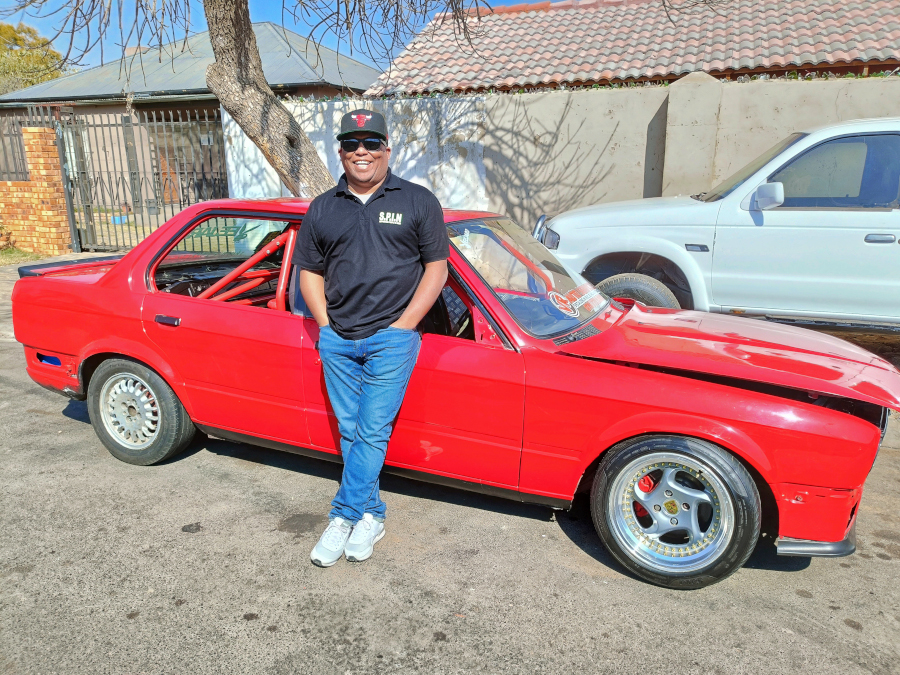
There is something glorious about deliberately smoking out a perfectly good set of rear tyres. Welcome to Spin, a uniquely South African motorsport that has attracted admiration after initial receiving disapproval. But there’s more … driving Cape Town Spin culture is a movement for social change.
A remarkable new documentary, The Soul of South African SPIN, produced by Jehran Daniel Naidoo of Auto Rush and to be found on YouTube, reveals there’s a great deal more to this culture than burning rubber.
In Mitchells Plain, where gang violence and limited opportunities are a reality for many youngsters, a group of passionate petrolheads are using spinning to create a safe space and a sense of real belonging.
However, to understand Spinning, it helps to know where it came from. Long before the BMW E30 became the unofficial national spinning machine, Cape Town enthusiasts were gathering at the Strandfontein Pavilion.
According to veterans interviewed in the documentary, the tradition stretches back to the early 1970s when the beachfront parking area became an informal meeting place for young motorists.
Soon, the parking lot became an arena where drivers showed their skills and occasionally shredded a perfectly serviceable set of tyres. The cars included Ford Escorts and rear-wheel-drive Toyotas, and the manoeuvres were relatively simple compared to today’s routines.
One of the pioneers remembered in the documentary is Victor Clayton, better known as Vicky, whose name became part of local spinning folklore. Decades later, the SPIN organisation (Supporting People in Need) brought him back behind the wheel at The Hills, introducing a new generation to one of the sport’s original heroes.
Few families embody Cape Spin history quite like the Februarys, headed by patriarch John ‘Soppas’ February. Across three generations, the family has helped shape spinning and drifting in the Western Cape, progressing from the early days of informal gatherings to purpose-built competition cars and international motorsport.
Sean February and fellow spinner Shane Green helped introduce a more aggressive driving style, including spectacular 720-degree rotations that became crowd favourites.
The guys started building dedicated machines, complete with roll cages and extensive modifications, transported to events on trailers. In 2010, Sean travelled to Japan to compete internationally, with his parents saving their own money to help finance the trip.
Now another February is making headlines. Eleven-year-old Connor February, the latest member of the family to get behind the wheel, became an internet sensation after performing at the GAS Motor Show in Durban.
While spectators marvelled at the youngster’s kwaai car control, critics questioned whether a child should be participating in such a potentially dangerous activity. The controversy helped inspire the doccie.
At the centre of the story is SPIN, a nonprofit organisation in Mitchells Plain using motorsport to bring people together and respond to the needs of the community.
One of its driving forces is Shahiem Bell, a lifelong Mitchells Plain resident who has been involved with cars for nearly four decades. Alongside chairman Johnny Schaffers and other volunteers, Bell has helped establish a programme that teaches youngsters car control, discipline, sportsmanship and personal development.
The organisation’s home pitch is The Hills, a spinning venue in Lentegeur, which has been formalised through a lease agreement with the City of Cape Town. The location has particular significance to Schaffers, and the story is one of personal tragedy transformed into community philanthropy. When he was just 12-years-old, Schaffer’s father was murdered in Mitchells Plain. After leaving school early to help support his family, he developed a passion for cars through his grandfather, who worked on engines.
Years later, taking his own son to Killarney sparked an appreciation of the father-son experiences he had missed out on, and a determination to give back to kids who might need such connection. That personal history eventually helped inspire a community initiative.
For decades, the Cape had no dedicated Spin pitch, and there would often be trouble with police. But the ongoing efforts of many players in the scene has brought Spin recognition as a motorsport that brings thousands of people together without the violence affecting surrounding neighbourhoods. There may even another location that SPIN is working on, in Macassar.
Bell emphasises the importance of developing well-rounded young people. The programme aims to teach humility, cooperation, communication and the ability to cope with challenges. The documentary outlines SPIN’s intention to equip children with tools to handle the difficulties they will inevitably encounter as they grow older.
The car, in other words, is simply the hook. The real work happens outside it.