Cape Town also regressed in its last audit and has track record of dismissing community concerns
As the municipal elections take place next week, the City of Cape Town’s two clearly identifiable weak points are housing, and sewage treatment, with the Auditor-General also noting concerns over procurement.
The City’s inability to meet its stated targets in relation to housing has been highlighted by the Auditor-General (AG) in their latest available 2024/25 audit report, and half of its 24 sewage treatment plants are failing to meet minimum treatment standards.
The City regressed in its audit outcome for the year, achieving an unqualified opinion with findings from the AG (along with eThekwini and the consolidated audit for the City of Johannesburg), as opposed to the clean audits (unqualified with no findings) it obtained from 2021/22 to 2023/24.
While an unqualified finding is better than one which is qualified (meaning the AG has to qualify their opinion on the financial statements), the AG warned these municipalities “continue to exhibit high levels of non-compliance, together with significant weaknesses in financial and performance management”.
Unqualified with findings is not an outcome that should be “regarded as desirable”, states the AG.
In Cape Town’s case, the AG’s report stated: “The Bid Evaluation Committee (BEC) did not apply sufficiently rigorous review processes when assessing tender documents, resulting in some bidders not being evaluated against all required responsiveness criteria and functionality specifications. “Misinterpretation of functionality requirements led to incorrect scoring and ultimately an incorrect contract award. Additionally, the Bid Specification Committee (BSC) failed to develop clear and unambiguous specifications, which increased the need for judgement by the BEC. Where such judgement was exercised, the decisions were not properly documented.”
Additionally, in the AG’s Consolidated Report on 2024/25 audits, it was noted the City of Cape Town awarded a contract worth R3.63-million to a supplier “in which close family members and business associates of employees have an interest”, without disclosing the award in the financial statement.
Housing targets not met
In the 2024/25 report, the AG notes the City aimed to provide 2,400 serviced sites for formal housing as part of the objective to increase the supply of affordable, well-located homes. The City only managed to supply 873 (36% of their target). It appears all these sites were at the Macassar mega project which aims to provide 2,469 “housing opportunities”, according to a City statement.
The reason given by the City in its annual report for that year was that the contractor at the Macassar project did not complete the sites and a new contractor was being appointed. According to an April 2026 report in The Bolander, the project continued to be delayed in the 2025/26 financial year.
The City also aimed to service 1,400 informal settlement sites in 2024/25, but only managed 354. The City’s explanation was that there were delays in appointing contractors for some areas, and larger projects needed extra time for planning. “Community-related delays” also played a role in a couple of sites, according to the annual report.
The City targeted 10 informal settlements for upgrading to phase 2, which requires installing basic water and sanitation services on a temporary basis before undertaking planning for permanent phase 3 upgrades. However, the City only upgraded four informal settlements. No reason for this low achievement is apparent in the annual report.
The City also only managed to release one out of a planned seven parcels of well-located land to the private sector for the development of affordable housing in the 2024/25 financial year. The reason for not meeting this target was that there were no bids from the private sector for six of the offered land parcels, and the City was conducting a survey to understand the reasons for this.
Human settlements mayco member Carl Pophaim told Mother City News the City five of the remaining land parcels were released to developers in the 2025/26 year, and five other land parcels have subsequently been released. They are parcels in Lansdowne, Ottery, Brackenfell, North Pine, and Fairdale.
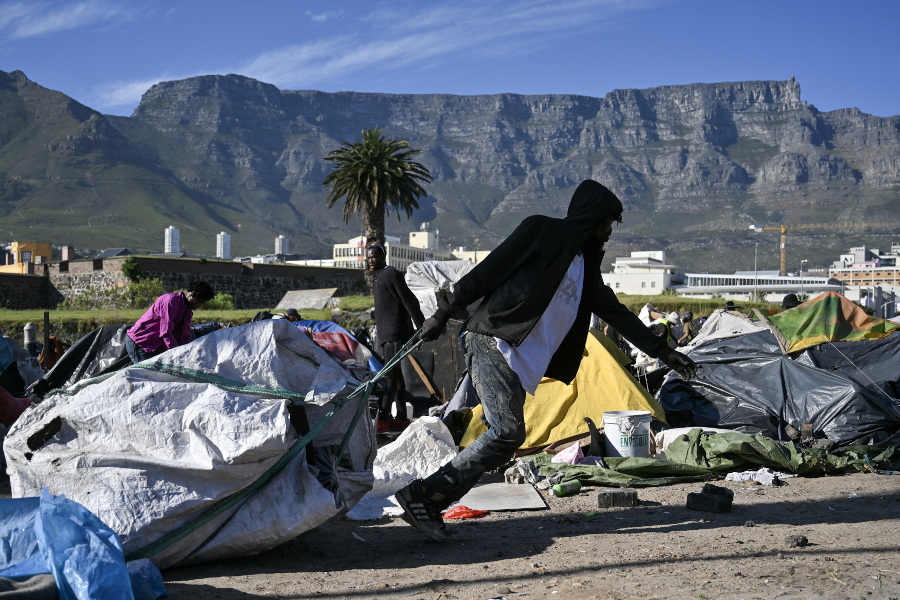
The lack of housing is an Achilles heel for the City. Here people occupying land outside the Castle of GoodHope were removed in November 2024. Photo: David Harrison/GroundUp
Housing affordability
The increasing unaffordability of housing in Cape Town has been well reported by Mother City News, GroundUp, and Daily Maverick. Mayor Geordin Hill-Lewis’s proposed solution is that more housing should be built by the private sector. When taking office, Hill-Lewis stated he wanted to see cranes dominate the city skyline.
However, many new developments, especially in the inner city and immediate surrounds, largely cater for a tourism or short-term letting market by building small apartments which are unsuitable for families or permanent living, with little to no units set aside for affordable housing. The City under Hill-Lewis’s leadership has also been averse to municipal intervention to reduce the inflation of long-term rentals or curb the proliferation of short-term letting for tourists which removes rental opportunities for permanent residents from the market.
Hill-Lewis has so far refused to entertain the idea of rent control, stating in an editorial published on GroundUp that it was a “heavy handed intervention” that would increase inequality.
“The only solution to housing affordability is either to reduce demand – which would mean becoming poorer, less attractive, less safe, and less economically dynamic – or you increase supply by building more housing. That’s it. There is no magical third option,” stated Hill-Lewis.
This neo-liberal supply-and-demand argument has been countered by, among others, associate lecturer in philosophy and doctoral candidate Kiasha Naidoo in the Daily Maverick (search ‘Kiasha Naidoo’ on dailymaverick.co.za).
In Mother City News’s opinion, Hill-Lewis should at least meet with civil society groups in good faith and discuss what might be possible, given the complexities of South Africa’s, and Cape Town’s, economic structures rather than maintain his current dismissal of citizens concerns and ideas, which can be perceived as arrogance.
And while the City’s move to register short-term letting sites and levy commercial rather than residential rates may release some housing back onto the local rental stock, the City has been clear in its statements that the regulation is aimed at levelling the playing field for the commercial accommodation sector. There is no mention of the impact of short-term letting on the housing market, where Airbnb alone has removed more than 27,000 potential long-term rental opportunities. There is also a loophole in the existing draft policy allowing a host to bypass commercial rates if the listing is only available for half a year. Thus a host of a popular listing could get by with just letting it out over the main summer tourist season and still just pay residential rates. Additionally, the 182-day letting period applies per room, so a three-bedroom house or apartment could simply limit the number of guests for a period of the year.
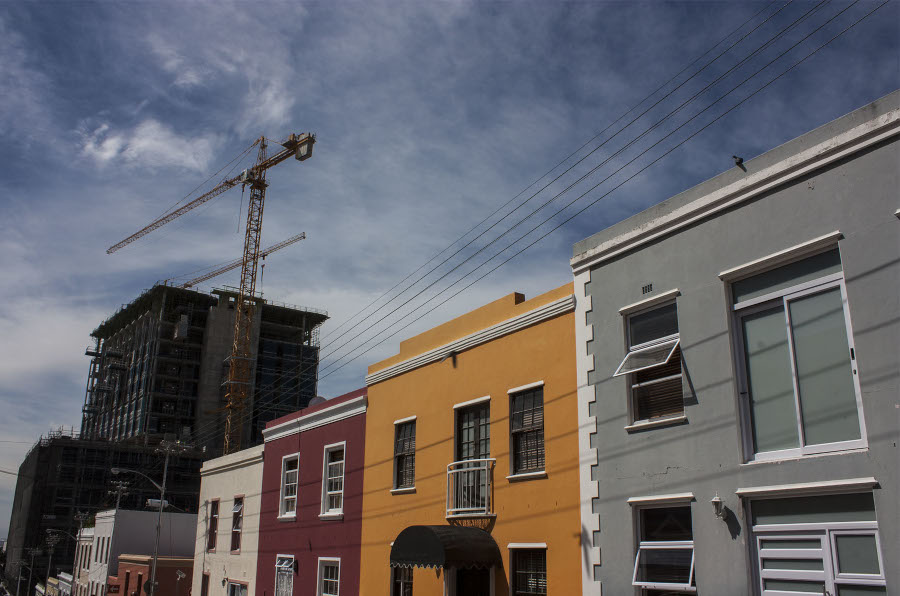
When taking office in 2021, mayor Geordin Hill-Lewis said he wanted to see cranes across Cape Town’s skyline as symbols of economic development. But development without considering the life and texture of established communities can leave the city sterile. Photo: Steve Kretzmann
Pollution of the environment
Cape Town’s drinking water consistently meets national standards, but the same cannot be said of its sewage treatment. Like all municipalities, the City is supposed to treat sewage and wastewater to minimum standards before releasing the treated effluent into rivers or the ocean. Results of monthly effluent testing are supposed to be loaded onto the Department of Water and Sanitation’s Integrated Regulatory Information System (IRIS) where a percentage for compliance over a moving 12-month period is displayed.
There is a glitch on the IRIS dashboard resulting in municipalities’ effluent compliance results not always being available, but data captured by Mother City News on 28 August shows multiple compliance failures on the part of the City.
Of the City’s 24 sewage treatment works, exactly half of them have either ‘poor’ or ‘bad’ compliance. This is a failure it shares with 111 of 113 other municipalities responsible for sewage treatment.
The failing sewage treatment works include Athlone, Borcherd’s Quarry, Cape Flats, Fisantekraal, Klipheuwel, Macassar, Mitchells Plain, Parow, Potsdam (Milnerton), Scottsdene, Wesfleur Industrial, and Wildevoelvlei wastewater treatment works in Kommetjie.
The worst offenders are the Cape Flats wastewater treatment works (WWTW) which has a 0% compliance for faecal bacteria and releases about 200-million litres of poorly treated effluent almost directly into False Bay every day, with the failing Macassar and Mitchells Plain plants daily adding another 66-million litres of pollution into the bay.
The failing Athlone plant pumps 105-million litres of poorly treated sewage into the Black River daily, while Wildevoelvlei ultimately releases about 8-million litres of pollution into the sea per day at the southern end of Noordhoek beach.
Sewage treatment failure at Potsdam WWTW, which the City is spending R5.2-billion to upgrade, has devastated the lower Diep River and estuary known as Milnerton Lagoon for years.
This is besides the 35-million or more litres of raw sewage the City is allowed to pump directly into the ocean at marine outfalls in Green Point, Camps Bay, and Hout Bay.
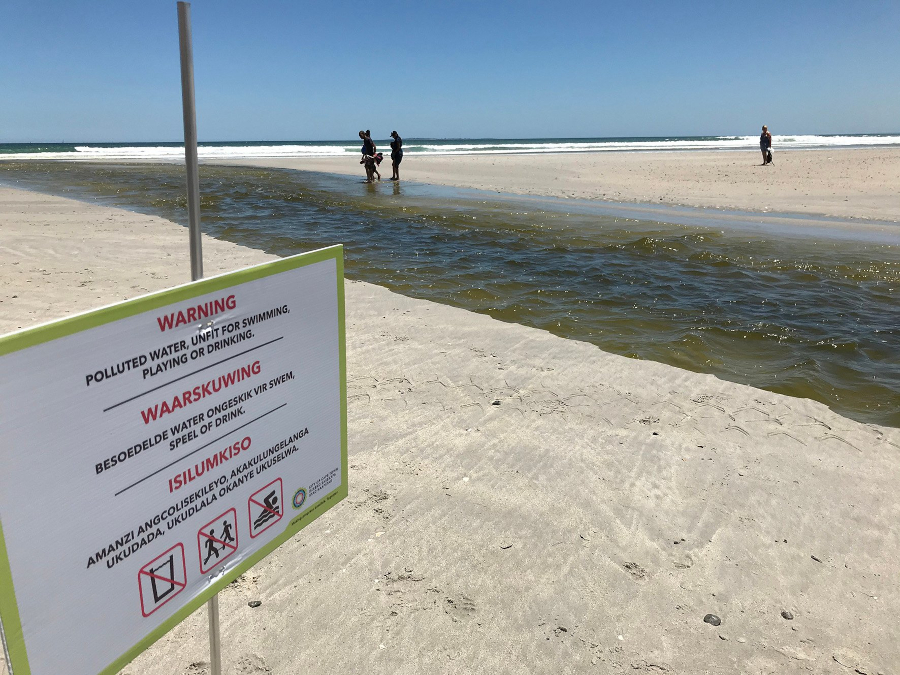
Longstanding pollution of rivers and the ocean surrounding Cape Town undermines its image of being a jewel on the tip of Africa. Photo: Steve Kretzmann
Opposition to civil society
To be fair, housing delivery is complicated by accelerated urban migration due to governance failures in neighbouring provinces, and reliance on grants from national government, as well as extortion, and inter- and intra-community tensions. The current City administration has initiated efforts to dismantle its legacy of apartheid spatial planning and is in the process of upgrading its aged sewerage infrastructure and sewage treatment plants, with upgrades to Potsdam and Wildevoelvlei plants underway.
Arguably the City’s most concerning flaw is an apparent aversion to working with communities of active citizens who add texture and cultural life to a city that had its heart ripped out by the apartheid bulldozing of District Six.
Not evident in AG reports or clear in financial statements is the City’s track record over the past two administrations of opposing or ignoring community groups willing to offer creative solutions to complex challenges.
In 2020, under the previous City administration, the City unequivocally supported the developers of the River Club site, now Riverlands, within the established Two Rivers Urban Park in Observatory. Heritage Western Cape’s refusal to sign off the flawed Heritage Assessment Report did not prevent the City from spending ratepayers money on a legal team to back the developers’ own lawyers in numerous court proceedings which the Observatory Civic Association and Goringhaicona Khoi Khoin Traditional Council were forced to initiate when their sustained objections were ignored. The organisations from the beginning stated they were not against development in itself, but wished to be included in envisioning what was to be built on the site of the first and original colonial dispossession of land from First Nations people in South Africa.
Their opposition and requests for inclusion were peaceful, persistent, and followed the rules of engagement, but were to no avail.
Then in 2021 the cold bureaucratic process was visible in the eviction proceedings initiated against the Willow Arts Collective at the old South African National Circus School in Observatory. The occupiers of the property, who originally moved in without knowing the then lessee was not allowed to sublet, tried to present a plan for a community garden and creative space that could benefit the surrounding community. They were backed by 16 established civic and non-profit organisations, yet the City chose eviction over collaboration.
The City’s responses to the occupation of the old Woodstock Hospital – renamed Cissie Gool House – has been equally bureaucratic and lacking in collaborative effort.
Most recently, the City is planning on auctioning off municipal land along the Liesbeek River in Mowbray to the highest bidder rather than accommodate an existing farmers market on the site, which serves the working class, middle class, and small farmers who travel from as far as Suurbraak to sell their produce.
These are just some examples within Mother City News’s distribution area which reveal a disturbing trend of an administration consistently choosing capital over community.
Danger in the polls
Cape Town faces numerous challenges, not all of its own making, but it is the best managed metro in the country.
Yet, Hill-Lewis this week stated polls put the DA winning just 51% of the vote in this election, down from the 58% they got in 2021. In his press release he begged Capetonians to come out and vote for the DA rather than end up with a hung council which would require a coalition to govern.
This is a fair concern, as the past five years have shown coalitions to be disastrous in the running of metropolitan municipalities.
If this comes to pass, the City politicians and administrators have only themselves to blame for not listening to, and working with the communities they are supposed to serve and which give the city its life and character. They would have been voted out by the people they ignored.
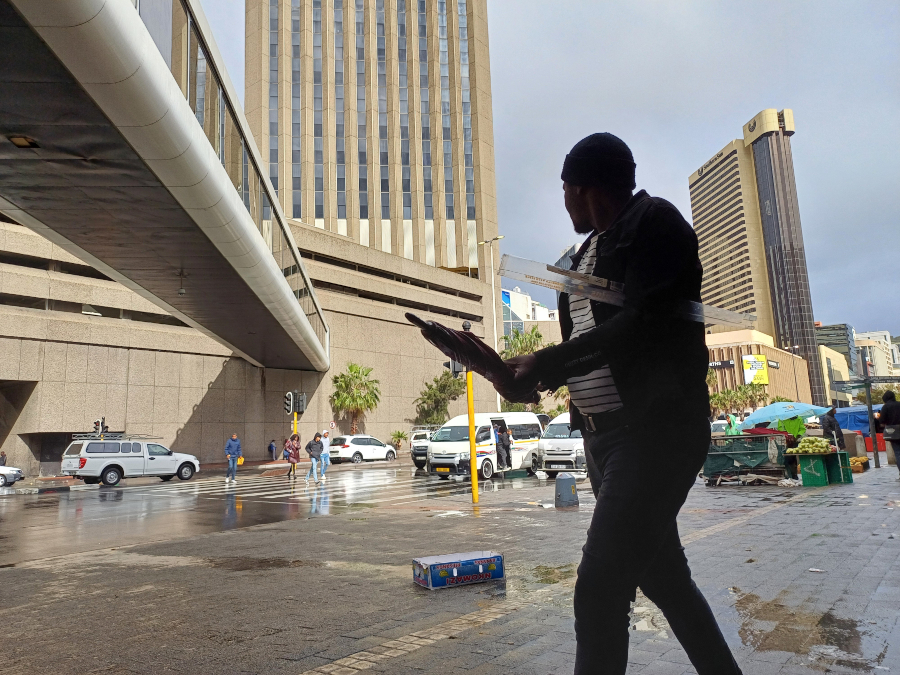
Persistent apartheid spatial barriers means Cape Town is not equally accessible to everyone who lives in it. Photo: Steve Kretzmann