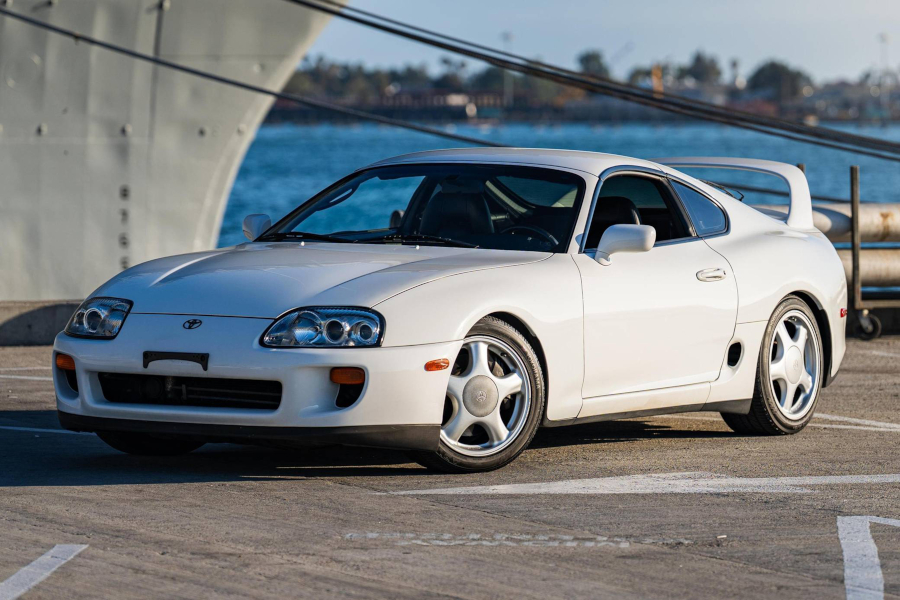
When it comes to engines and racing hunks of metal around, there’s hardly a more popular block than the Toyota JZ. And the Cape car culture just loves this powerplant. The one that really gets the petrolkoppe revving is the 2JZ-GTE, the archetypal turbo engine. Toyota built it from 1991 to 2007, and modifiers are still finding ways to squeeze more out of it.
Toyota’s JZ family arrived in 1990. These were inline six-cylinder engines with 24 valves and dual overhead cams. The first was the 2.5-litre 1JZ, which came in naturally aspirated GE and twin-turbo GTE forms. The 3.0-litre 2JZ followed in 1991, and soon after the GTE became the flagship performance engine in the Supra RZ in 1993.
When the Supra got the almost indestructible cast-iron 2JZ-GTE, the petrolheads got inventive. Toyota had given them a closed-deck block, which means there’s plenty of metal (aluminium cylinder head) supporting the tops of the cylinders where combustion pressure is highest. The forged crankshaft rides on seven main bearings. And there are little details you’d never see with the bonnet open, like oil squirters that spray the undersides of the pistons to keep them cool. Somehow the Toyota engineers back in the day seemed to know people would be pushing this thing to the limit.
And just one or two more things about the inline layout. Unlike V-type engines, which cause the assembly to get thrown about in opposite directions, inline gives an even distribution of mass so you don’t get that polar rocking motion as in other V6s or V8s. In the 2JZ, the whole mess of pistons and rods is naturally balanced. The front three cylinders mirror the back three, so their movements cancel out the forces that would otherwise shake or rock the engine. Ingenious stuff this, and it also means you can rev it higher, longer and smoother. It’s also tightly packed, which means more room underneath for the extra goodies. A modifier’s dream.
Here’s an example of what the petrolheads did. They scrapped the sequential twins for a bigger single turbo, sometimes a 64mm unit, and fitted an external wastegate, a bigger intercooler, a high-flow fuel pump, bigger lines and injectors, and a tunable ECU. Get the fuel and ignition right and that factory-floor 320hp can turn into 700hp or more. That’s the bit that made the GTE famous. Builders could make big gains while keeping the factory bottom end, provided the engine was healthy and the tune was right.
Then there’s the 1500hp mark, if you really want it. Nobody needs a 2000hp Supra, but there’s always someone with a big turbo and a bigger set of cojones. At that end of the game, the old shopping list grows to include things like stronger head studs, a ported head, forged pistons and rods, and a fuel system capable of keeping up. You’re building a race engine by then, and the turbo is just one part of the bill.
The block explains what the engine can take. The aftermarket goodies explain why people keep putting it into other cars. There are turbo manifolds, wiring looms, engine mounts and gearbox adapters for all sorts of builds, and tuners have spent decades working out what combinations work. That takes some of the guesswork out of a transplant, whether the plan is a street bakkie, a drift car or a quarter-mile machine.
Few production engines have inspired people to chase such outlandish horsepower. But the 2JZ’s appeal starts well before four figures. You can build one for a Hilux that still does daily duty or for a Supra that spends its weekends at the strip. Either way, you start with a stout six-cylinder and a long list of people who’ve already worked out how to make it go.